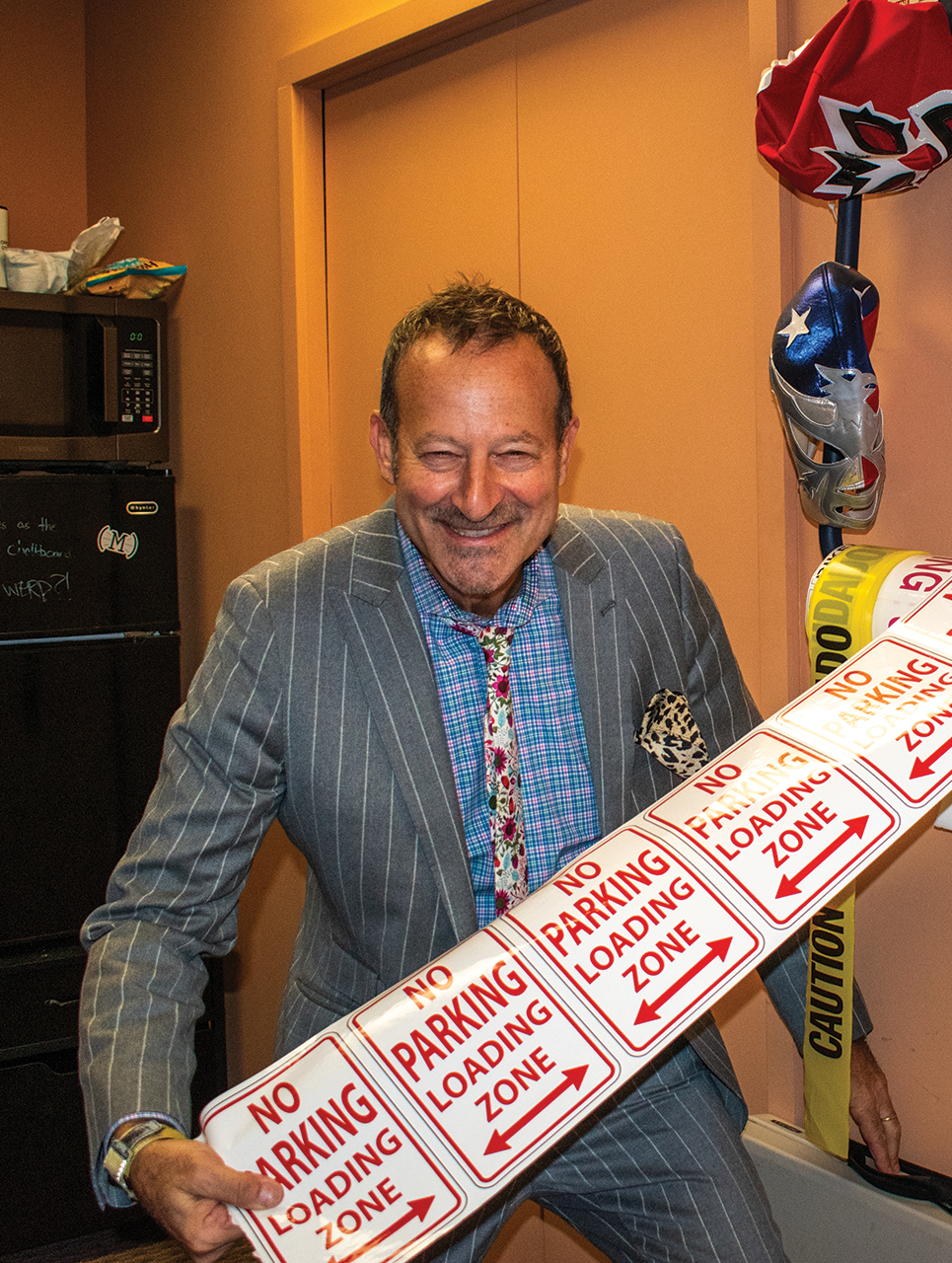
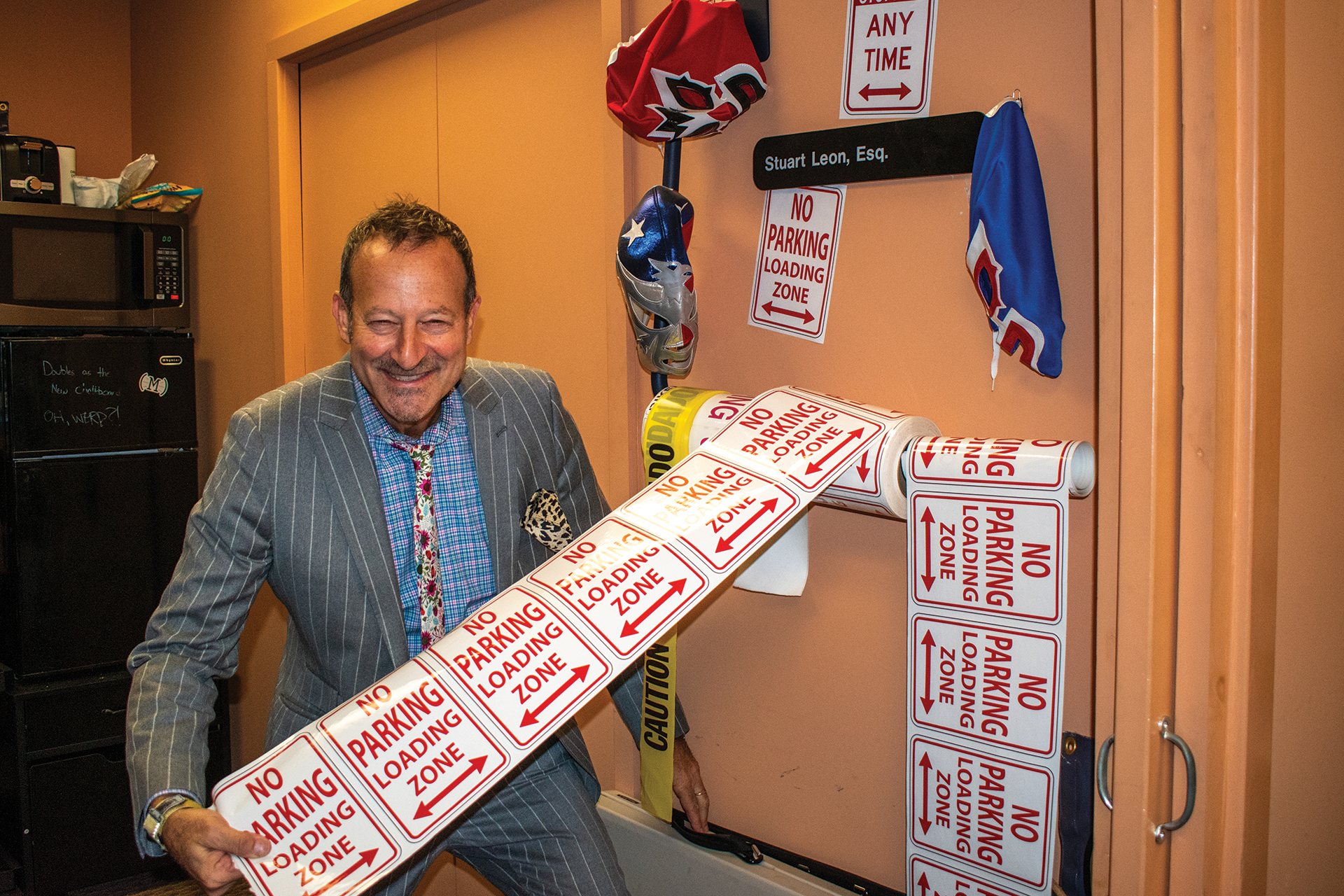
The entrance to Stuart Leon’s office is adorned with a rack of luchador masks and rolls of “Loading Zone” stickers. Life-size cardboard cutouts of Leon and his legal team welcome guests into the office’s nerve center, where Stuart Leon Bicycle Crash Law T-shirts spill from the shelves. From under a pile of brightly patterned neckties, Leon pulls a pirate sword. “Because we’re the enforcement.”
Leon has been representing bicycle crash victims in the city since 1997. In that time, Philadelphia’s bicycle ridership has more than doubled, with South Philly and Center City having some of the highest bicycle commuter rates in the nation, and more than 200 miles of bike lanes have been added to the city’s streets. Although the numbers might suggest that Philadelphia has become a top city for cyclists — and it has — Leon says that the growth in infrastructure hasn’t been met with adequate enforcement.
“The tolerance of parking and loading zone activities in the bike lanes — that’s the status quo. And we’re trying to change that.”
In December of 2024, Mayor Cherelle Parker signed the “Get Out the Bike Lane Bill” into law, increasing fines for those who park illegally along bike lanes throughout the city. “If you ask any bicycle rider if it’s made a difference in their commute, it hasn’t,” says Leon, an avid cyclist himself. It’s that persistent lack of enforcement that inspired Leon’s “GTFOTBL” sticker campaign, which colorfully riffs on the actual law’s tamer name. When the bill was first introduced in City Council, Leon began implementing enforcement on his own right away. He started posting videos to his social media page, wearing his signature colorful suit — and a luchador mask — slapping vinyl stickers onto the windows of delivery trucks stopped in bike lanes in Center City.
“These delivery companies, they just pay these tickets in bulk. They’re absorbed into the cost of doing business,” says Leon. “They are renting the bike lanes.”
On a recent “enforcement sweep,” Leon stickered a FedEx delivery truck in a bike lane on Pine Street and was questioned by the driver. When Leon pointed out that bicyclists were being forced to go around the truck, the driver replied that the company told him he could stop in bike lanes. After Leon told him he couldn’t, the delivery driver proceeded to stop further down in the travel lane of Pine Street to make his next delivery. “Good on him, right? And then there’s just a stream of cars going around him — into the bike lane.”
Since the COVID-19 pandemic, Leon has seen a dramatic increase not only in the number of delivery trucks in the city obstructing bike lanes, but also in the number of hit-and-runs involving bicyclists. He calls it an epidemic.
Oren Roth-Eisenberg was a client of Leon’s in a 2019 lawsuit against Julius Silvert for its delivery trucks parking in the 13 Street bike lane during morning rush hour. After several near-miss incidents on his daily commute, Roth-Eisenberg took action against the food distributor and the PPA for effectively renting out the bike lane to the company. The suit was eventually dropped, and the City ended up moving the 13th Street bike lane to the other side of the street and separating it with flex posts, in addition to adding more loading zones. Then, in 2021, Leon represented Roth-Eisenberg again, after he was the victim of a hit-and-run in Fairmount Park.
Roth-Eisenberg was riding up Sedgley Drive when a driver weaved into the bicycle lane and struck him. “The vehicle kept driving and then looped around about a minute later, stopped in front of me — saw that I wasn’t dead — and then, as I tried to walk over to the vehicle, sped off again.”
After the crash, Roth-Eisenberg reached out to Leon, who was able to identify the owner of the vehicle and seek damages for his medical care for the broken wrist he suffered. Although he recovered relatively quickly, not being able to ride his bike for a month essentially put his life on hold, Roth-Eisenberg says.
“That’s my transportation. That’s my social life. That’s part of my identity. I mean, I have a tattoo of a bike on me,” says Roth-Eisenberg.
“It’s a helpless place to be in after you’ve been crashed out. And they come here, and we start putting the pieces back together for people,” says Leon.
Perhaps the most common type of bike crash Leon sees is dooring — he works for one such victim every week. Michelle Smolka, of Grays Ferry, had been the victim of about a half-dozen dooring incidents before a passenger exiting a vehicle doored her on 3rd Street in 2019, sending her off her bike and into a parked car.
“I had to get 21 stitches in my left thigh. It was pretty deep. And my helmet was totally crushed, which was great, because otherwise, that would have been my head,” says Smolka. Smolka, who previously worked as a bike courier, knew Leon through the bicycling community and called him the next day.
While dooring incidents are not a new phenomenon, one big change for Leon is that his office has become a family business: Ten years ago, Leon’s son, Zachary, entered the law field. Zachary Leon says since joining the practice full-time, he’s never wanted to have another job, and between the two of them, the father-son duo are now in court almost every day defending the rights of bike crash victims.
“The two of us were so much more than the sum of the parts,” Stuart Leon says. “And I don’t think I ever would have trusted somebody. I didn’t trust anybody else or even try.”
Zachary Leon says he and his father don’t leave their work at the office. “My mind and heart and our conversations are always here. We talk about it at home. We talk about it down the shore.”
As for the road ahead, while Leon says the outlook for safe bike lanes is “grim,” he believes that proper enforcement and a shift in attitude to one that’s respectful of bicyclists’ rights could brighten that future.
“The city has the potential to be the most incredible place to commute by bike,” says Leon.
“One year from now, if they took enforcement seriously and started towing these vehicles out of the bike lanes, I think it’d be a different world here.”
A Look Back

Notes from Publisher Alex Mulcahy
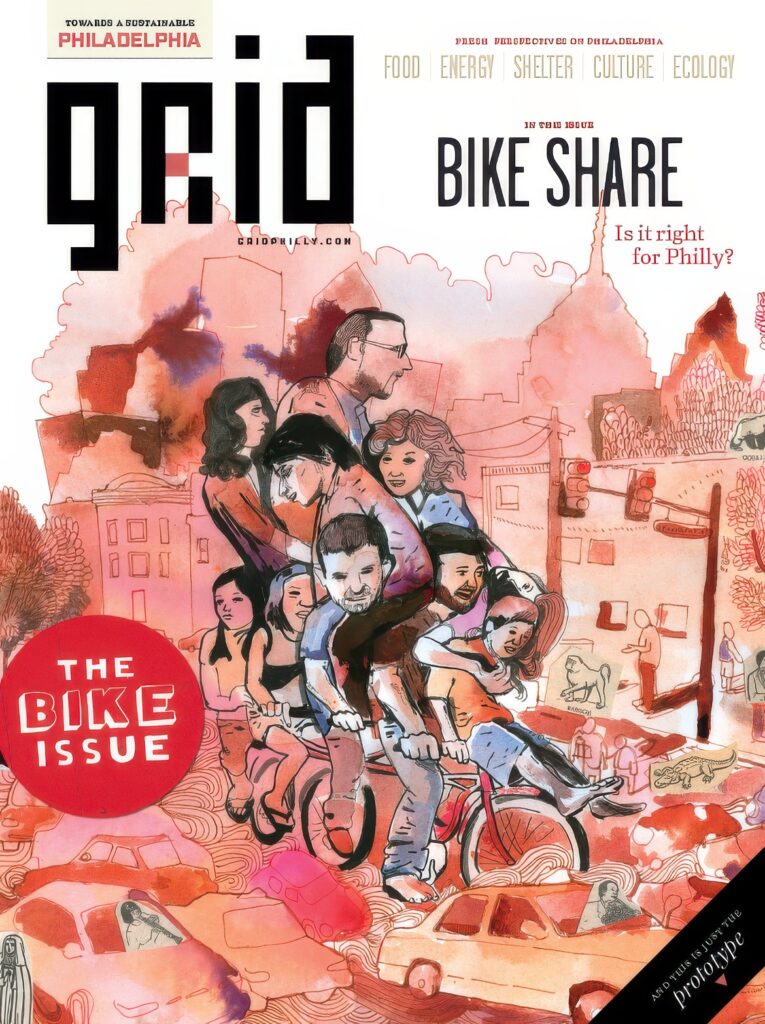
In 2008, Dana Henry’s story about a lawyer focused on defending cyclists seemed novel and niche. Sadly, representing injured riders seems to be a steady business. Congratulations to Stuart Leon whose operation now includes his son Zach. Dear readers, may you never have occasion to call Stuart Leon. But he will be there if you need him.