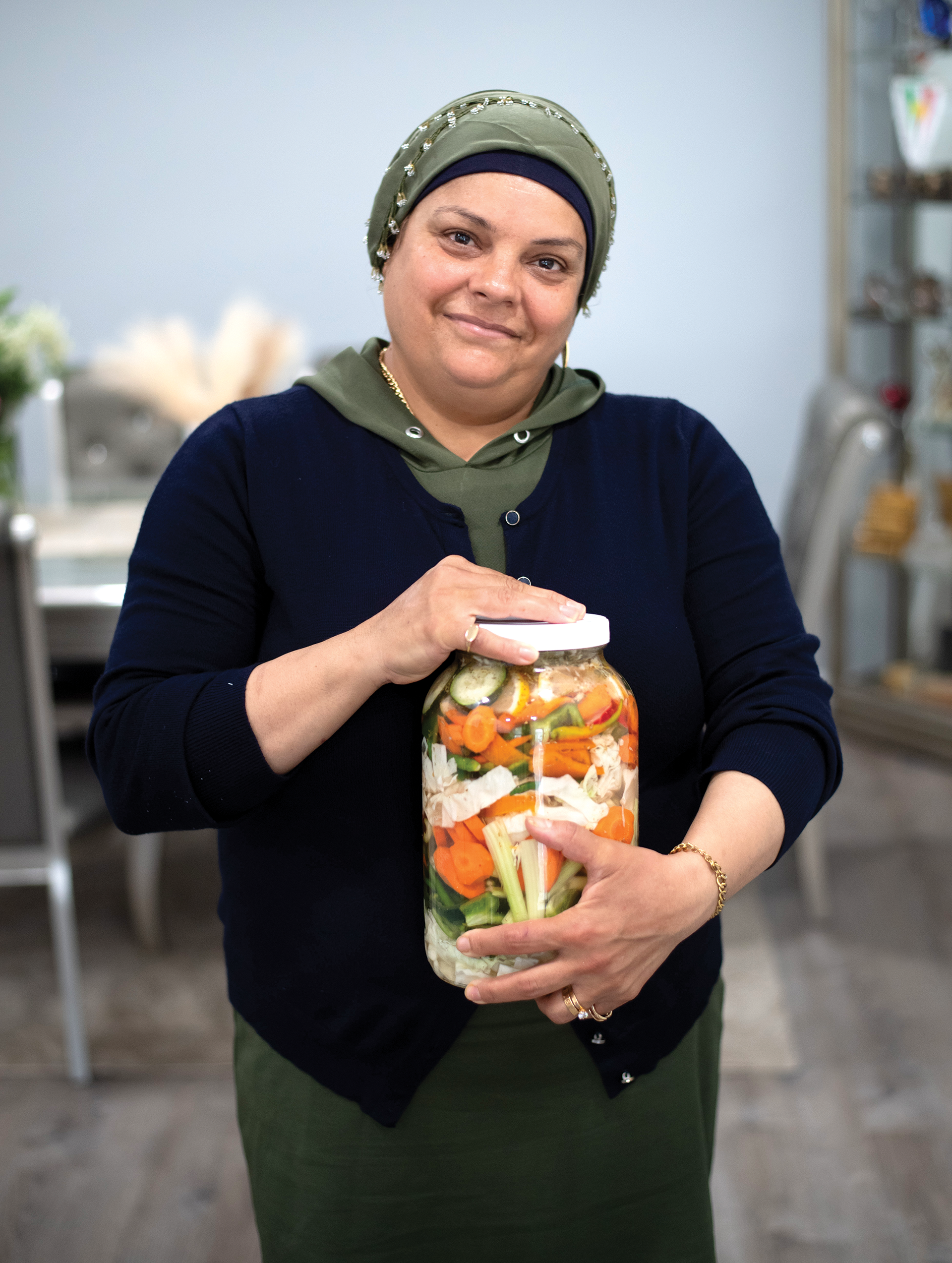
Summer is over, but it’s not too late to capture its flavors in a jar. Scoop up late-season veggies at your farmers market and lean into the magic of pickling. Amina Aliako is eager to share her Syrian-style pickling secrets with you.
At its most basic, pickling requires only four ingredients: water, salt, vinegar and produce. Although pickling as a method for preserving foods has been practiced around the globe for centuries, its history has some fun local ties. Born in the U.S. to German immigrants, Henry J. Heinz founded the Pittsburgh-area company that became one of the first commercial pickle makers in the United States. Heinz pickles came to prominence during the 1893 World’s Fair as a result of a brilliant marketing scheme: Heinz advertised that anyone visiting his booth would receive a free pickle pendant. These small plastic charms were designed to adorn a watch chain or woman’s brooch. According to company history, Heinz gave away more than 1 million pickle charms during the five months of the fair, bringing the Heinz name and product into households across the country.
Less spectacular but still significant to pickle enthusiasts, John Mason, a tinsmith from Vineland, New Jersey, made home pickling safer in 1858 by inventing a square-shouldered jar with an airtight screw-top lid and rubber ring to replace unreliable sealing wax. Pickles later got unexpected acclaim from the September 2000 “Pickle Juice Game” in Dallas, so named after the Eagles beat the Dallas Cowboys 41-14 in temperatures topping 105 degrees Fahrenheit. The Birds credited drinking pickle juice with giving them their edge.
I would like to write everything about my product … to teach people about it.”
— Amina Aliako
Amina Aliako has her own pickle history. Her mother, an acknowledged gifted pickler in Aleppo, taught her how to make the sour pickles Syrians expect at every meal. In 2017, the International Organization for Migration (IOM) brought Aliako and her family to Philadelphia. Aliako found work doing housekeeping at the Reading Terminal Market, where she saw a gap in the foods on offer, and approached general manager Anuj Gupta with an idea. The market management helped Aliako complete the requirements to become a vendor, and by 2019, she was selling authentic Syrian foods such as baba ghanouj, hummus and assorted pickles. The COVID-19 pandemic ended that dream when market operations were suspended.
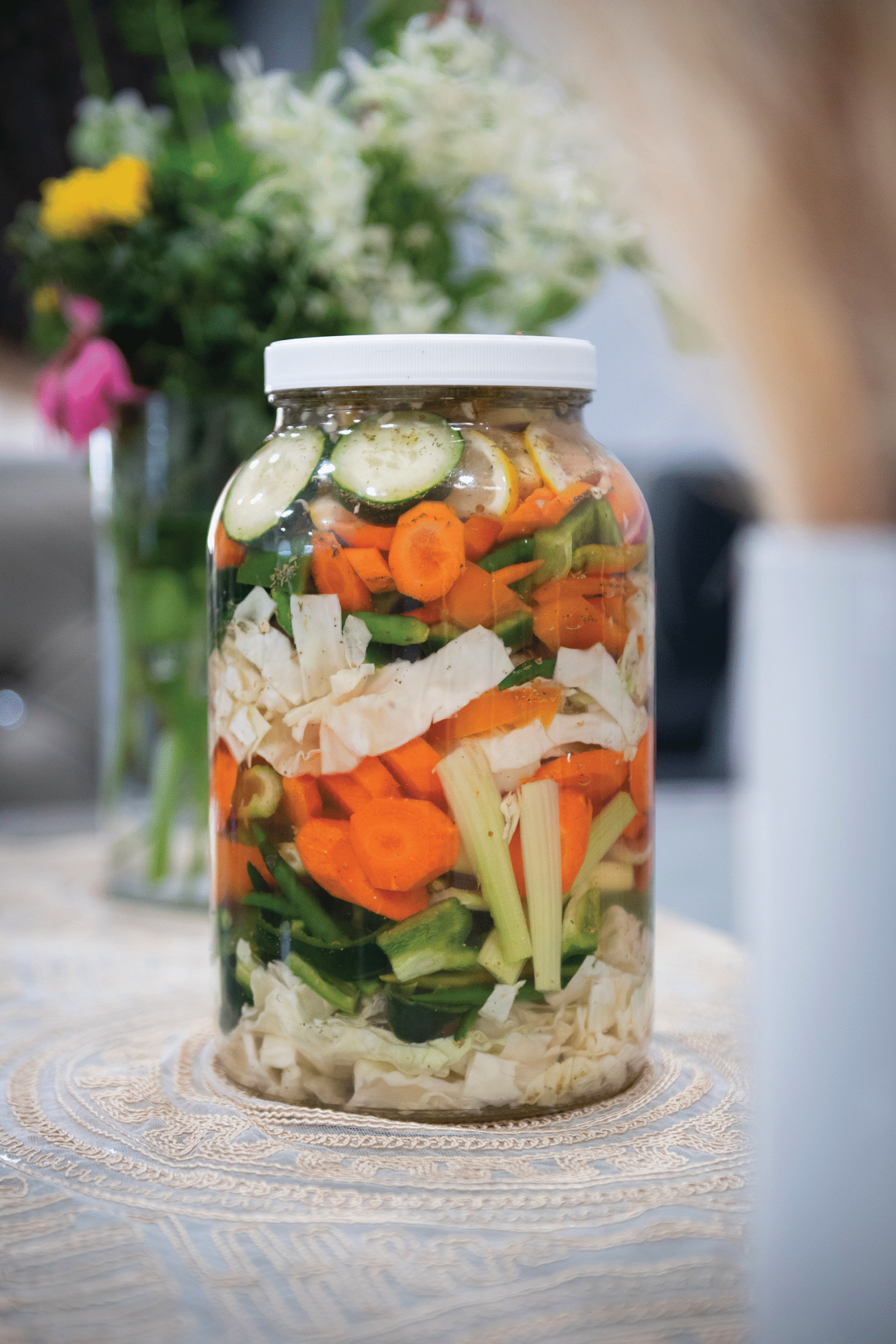
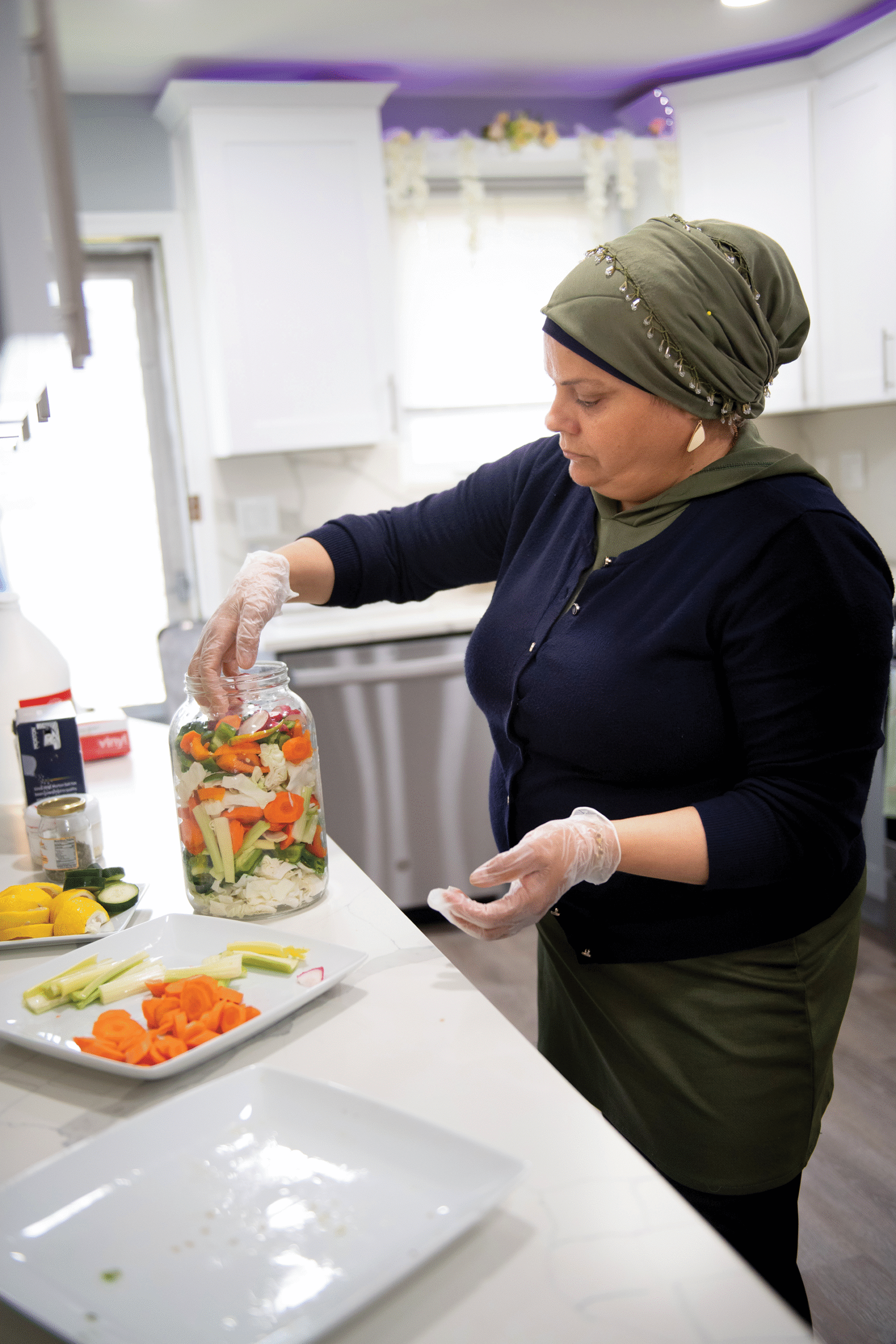
These days, Aliako continues her family pickling tradition in her Northeast home kitchen, making gallons of pickled mixed vegetables for family and friends. “My kids are 16, 20, 22 and 24 and they love my pickles. They are always asking for some to be ready,” she says. She cooks many Syrian dishes for her children so they “don’t forget what is their country’s food.”
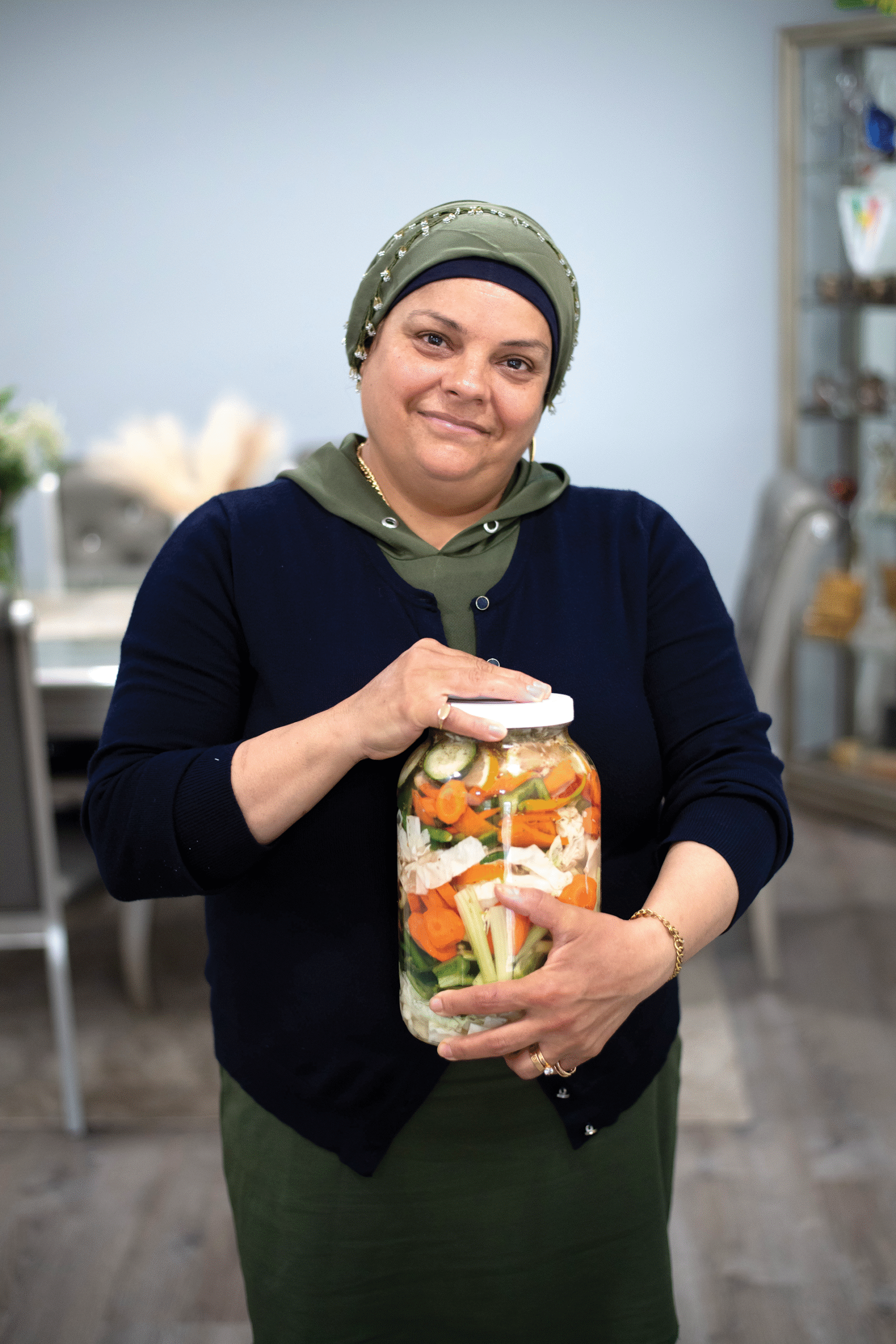
Aliako has discovered that “too many people don’t know about pickles. I would like to write everything about my product and spice to teach people about it. I want to share my recipe with people.” Here’s your chance to venture beyond the cucumber and taste pickled summer in the cold months ahead.
Amina’s Mixed Vegetable Pickles
Makes 6 to 7 pounds of assorted pickles, enough to fill a 1 gallon jar
10 medium cucumbers, unpeeled, cut into ½” slices (approx. 12-15 cups)
6 large carrots, peeled, cut into ¼” slices
6 green peppers (spicy or mild), cut into 1” dice
1 small green cabbage, rough chopped
6 cloves finely minced garlic
1 Tbsp. ground dried coriander
¼ cup salt
1 Tbsp. sugar
3 cups white vinegar
A large pinch of dried mint
- Wash and cut the vegetables thoroughly, mix together, then layer them in the jar.
- Fill the jar with cold water, then pour the water into a large bowl to measure the exact amount needed. Remove 3 cups of water and discard.
- Dissolve salt in the water. To ensure the perfect balance, place a whole uncooked egg in the water. If it floats to the surface, the brine is just right. If not, add more salt.
- Add vinegar and sugar to the brine.
- Stir in garlic, coriander and dried mint.
- Optional: Citric salt (known in Syria as milh al-lemon), available in the Middle East, is what allows pickles to stay fresh for longer.
- Pour the brine back into the jar, seal tightly, and leave in a cool place at room temperature for one week.
- After seven days, the pickles will be ready to enjoy.
- Note: Once the jar is opened, do not return any leftovers back into the jar. Exposure to air weakens the brine and may spoil the rest.