

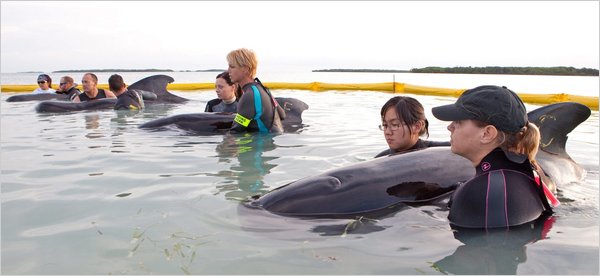
 Volunteers care for stranded whales | Image via nytimes.com
Facebook photos make college parties greener
Wild, drunken frat parties aren’t particularly environmentally friendly. Instead, they usually end up leaving a pile of strewn bottles in and around trashcans, instead of recycling bins. A study at Newcastle University in the United Kingdom is using Facebook to hold inebriated co-eds accountable for their waste by uploading pictures of trash bins for everyone to see. Shame shame. GOOD
Google invests $280 million in solar energy
Google made its largest clean energy investment recently when the company spent a whopping $280 million to put solar panels on the rooftops of private homeowners. The search engine’s cash will allow installer SolarCity to offer systems to homeowners at no up front cost. In exchange, customers will pay a set price for the sun power produced. HuffPost
3 whales are fighting for their lives
The remaining three whales from a pod of 23 are struggling to stay alive at the Marine Mammal Conservancy center in Key Largo, Florida. The pod of 23 became stranded in shallow water, and unfortunately most of the gargantuan mammals perished in the dry conditions. Human caretakers at the conservancy are doing all they can to help the final few stay alive. NY TIMES
Lead poison outbreak in China affects 103 children
Lead pollution from tinfoil workshops in China has seriously poisoned 103 children under the age of 14 and affected hundreds more. Over 250 micrograms of lead for every liter of blood was discovered in the children’s bodies. Lead posioning in children may contribute to learning disabilities and behavior problems. MSNBC
Polar Bears can survive Global Warming
According to experts at Natural Resources Defense Council (NRDC), polar bears could be completely extinct by 2050, just a mere 39 years away. But, research from Nunavut Arctic College and the University of Manitoba are saying that if the bears can adjust their diet to fit the gradually warming climate, they may have a good chance of surviving. How do we tell these cuddly (yet deadly) creatures to change the way they eat? EcoHearth