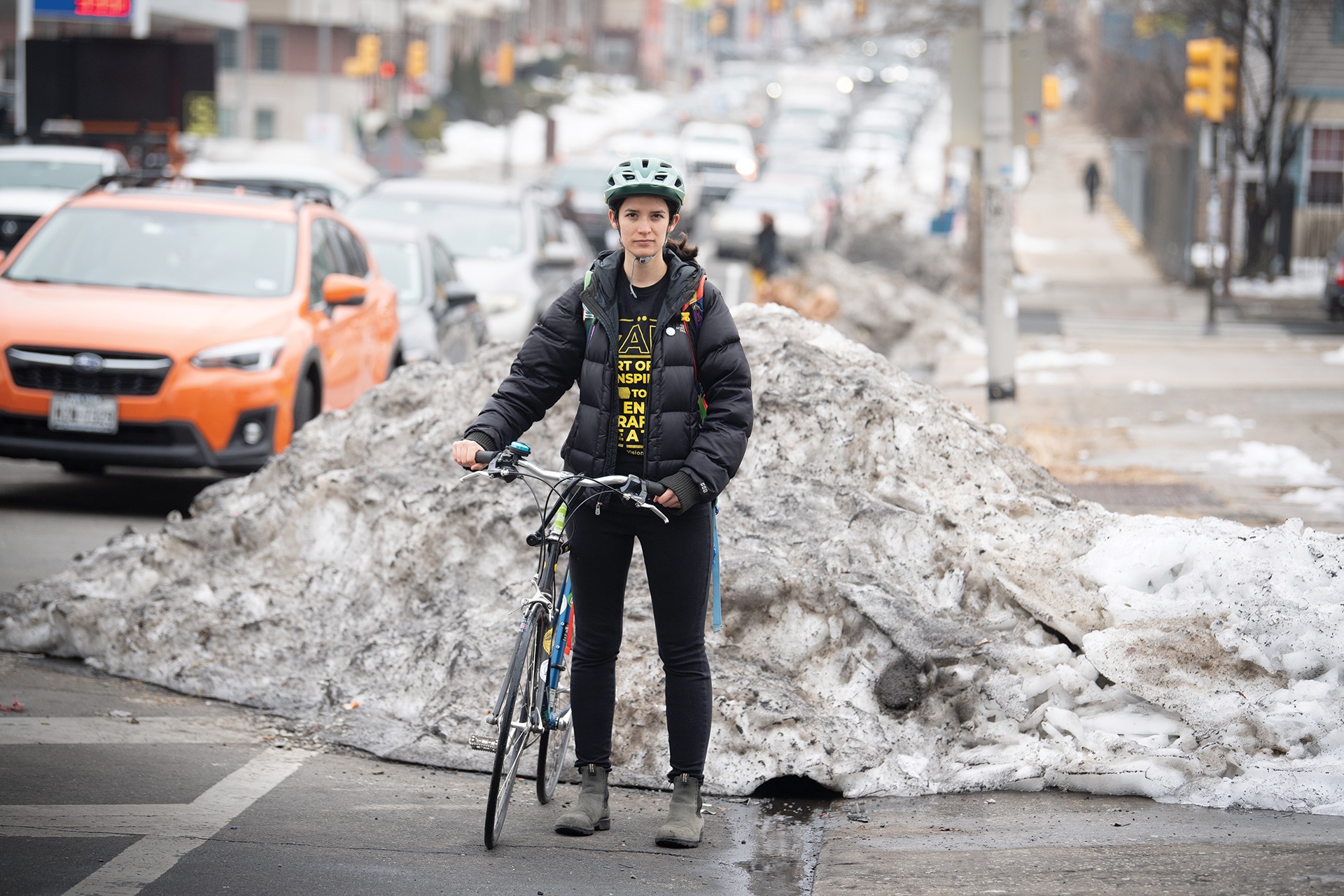
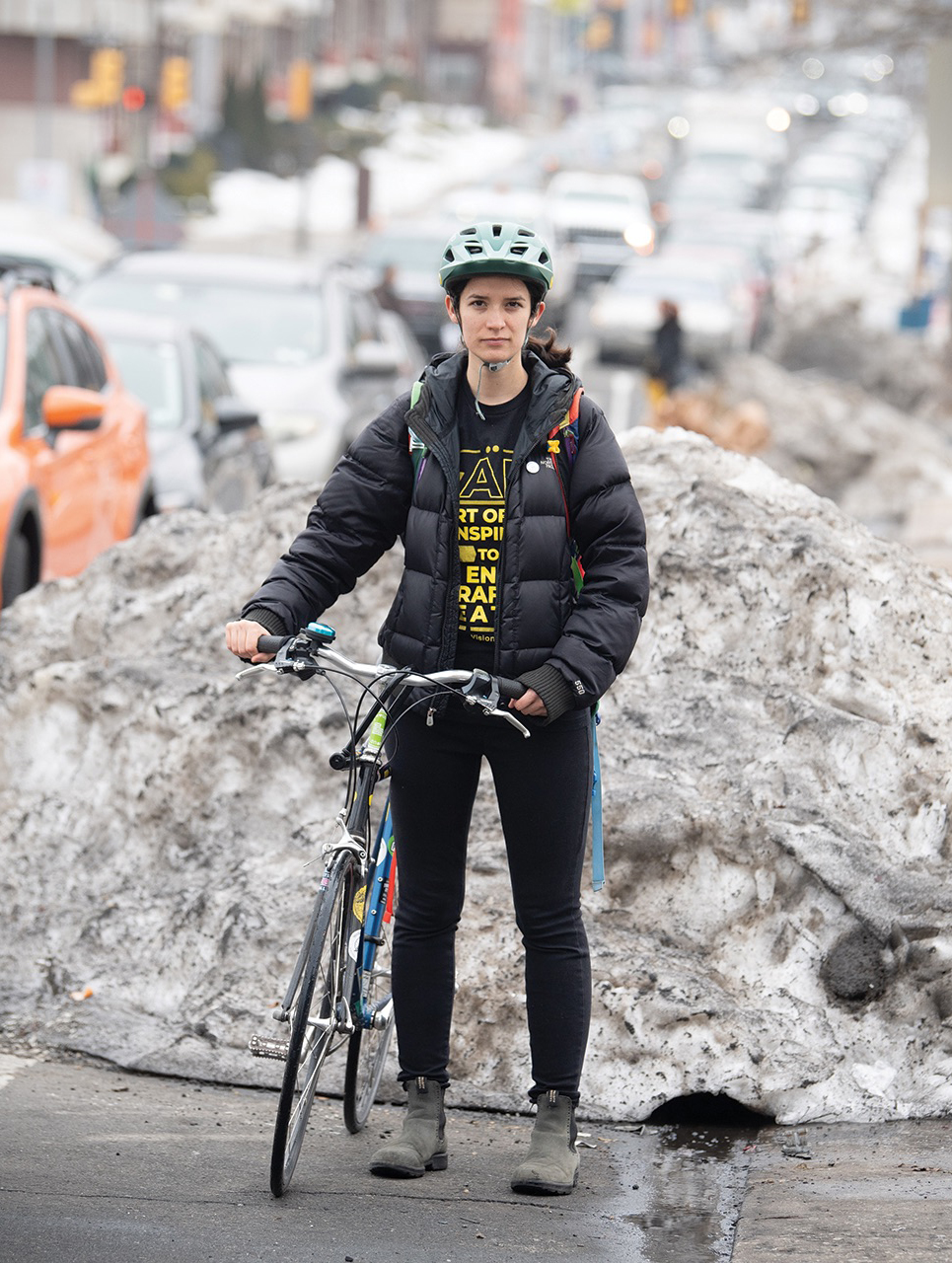
Hanna Kahler lives in West Philadelphia and rides her blue commuter bicycle to work in the Graduate Hospital neighborhood, a trip she says takes 18 minutes.
When she spoke to Grid on Feb. 12, more than two weeks after the last snowflakes of the Jan. 25 winter storm fell, she was still unable to ride to work. She could take SEPTA’s 40 bus. “If it works well, it takes 40 minutes, but it hasn’t been working well,” she says. Mostly she’s been walking, which takes 47 minutes. “The City has completely dropped the ball on maintaining the bike lanes,” Kahler says.
The snow that fell directly onto the bike lanes and that the City did not clear wasn’t the only challenge. “Ignoring it is bad enough, but they’ve shoved piles of snow into the bike lanes,” Kahler says, referring to heaps — some as big as an SUV — that City workers clearing the roads had plowed into the bike lanes at intersections.
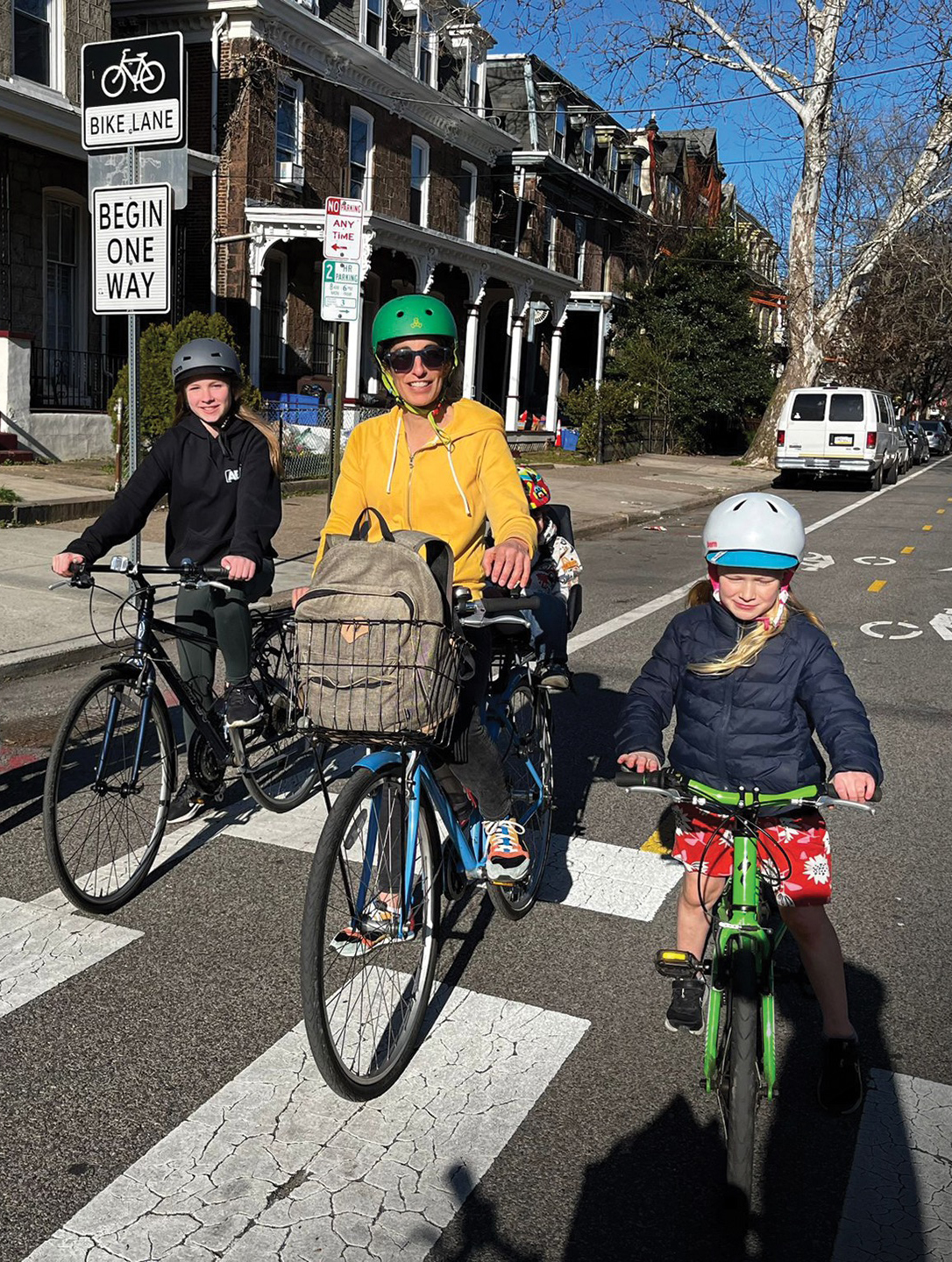
“Nearly all of the separated bike lanes (parking or flex posts) are untouched or, worse, being used for snow storage,” said John Boyle, research director for the Bicycle Coalition of Greater Philadelphia, in mid-February when Grid reached out to him. “The painted bike lanes throughout the City vary in passability depending on how far the plows pushed the snow. Even those routes have been blocked at corners.
The city has completely dropped the ball on maintaining the bike lanes.”
— Hanna Kahler, cyclist
Uncleared or badly plowed snow is a major inconvenience for the able-bodied, but people with limited mobility fare worse after a snowstorm. An 18-inch berm of icy snow left by a plow might as well be a wall. The snow on sidewalks can narrow the walkway too much to allow wheelchair users to pass.
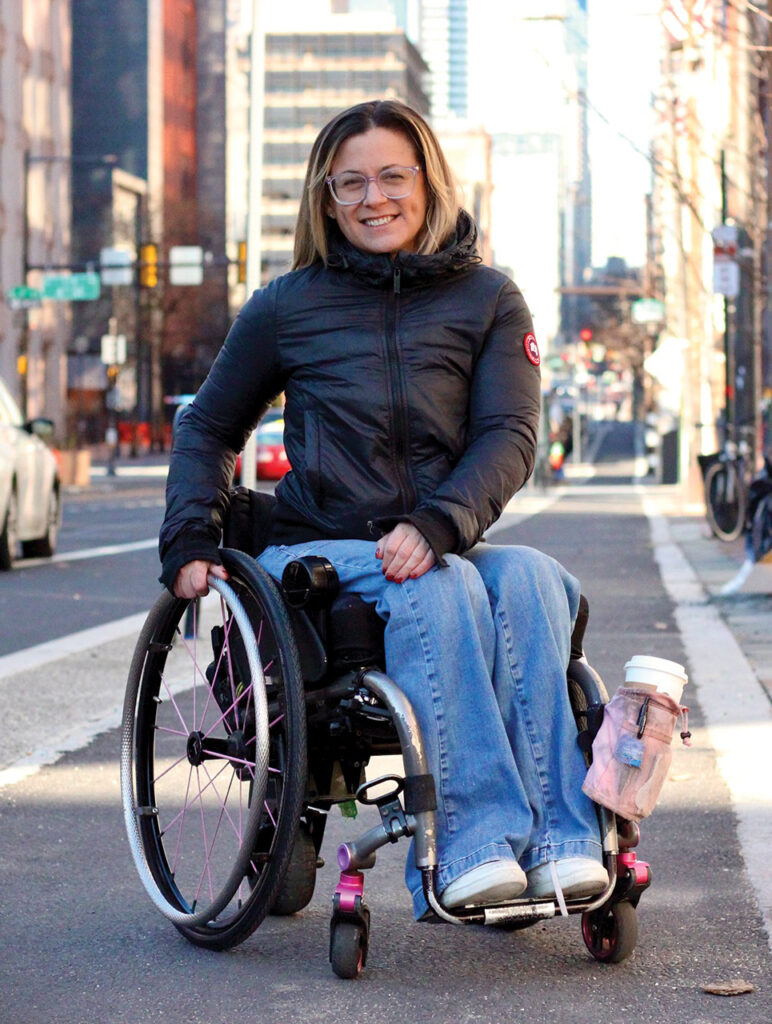
“Snow clearance is not just a mobility inconvenience but an accessibility and equity issue,” says Amanda Parezo, who relies on a wheelchair to get around. In the wake of the January storm, she says, “I was forced to take detours, backtracking or sometimes abandoning a trip entirely. It was detrimental when I had to attend an important medical appointment. An Amazon driver had to stop what he was doing to help push me down a sheet of ice on 4th Street.”
Parezo often uses bike lanes when sidewalks are made impassable by broken pavement or construction, as covered in this issue of Grid. But after the storm, she found that the snow piles in the bike lanes spilled out to block corner crossings. “That overflow often ends up obstructing accessible pathways.”
The long delay in clearing the bike lanes was not inevitable. Other cities with protected bike lanes manage to plow them. Boyle pointed to Montreal, which receives about 80 inches of snow a year and keeps its bicycle infrastructure accessible through the winter. “The City [of Philadelphia] does have Bobcat mini tractors with snow plows and did a fair job with a mid-January snow event,” Boyle says.
Reached by email Feb. 16 for comment, City representative Sharon Gallagher said that the City had prioritized transit routes and curb ramps after the storm. “With this work wrapping up and the weather warming, the City is now going to be tackling priority bike lanes. Some of that work has already started. We thank cyclists for their patience.” Gallagher did not respond to questions about a timeline for the bike lanes or clarification about which lanes were considered “priority.”