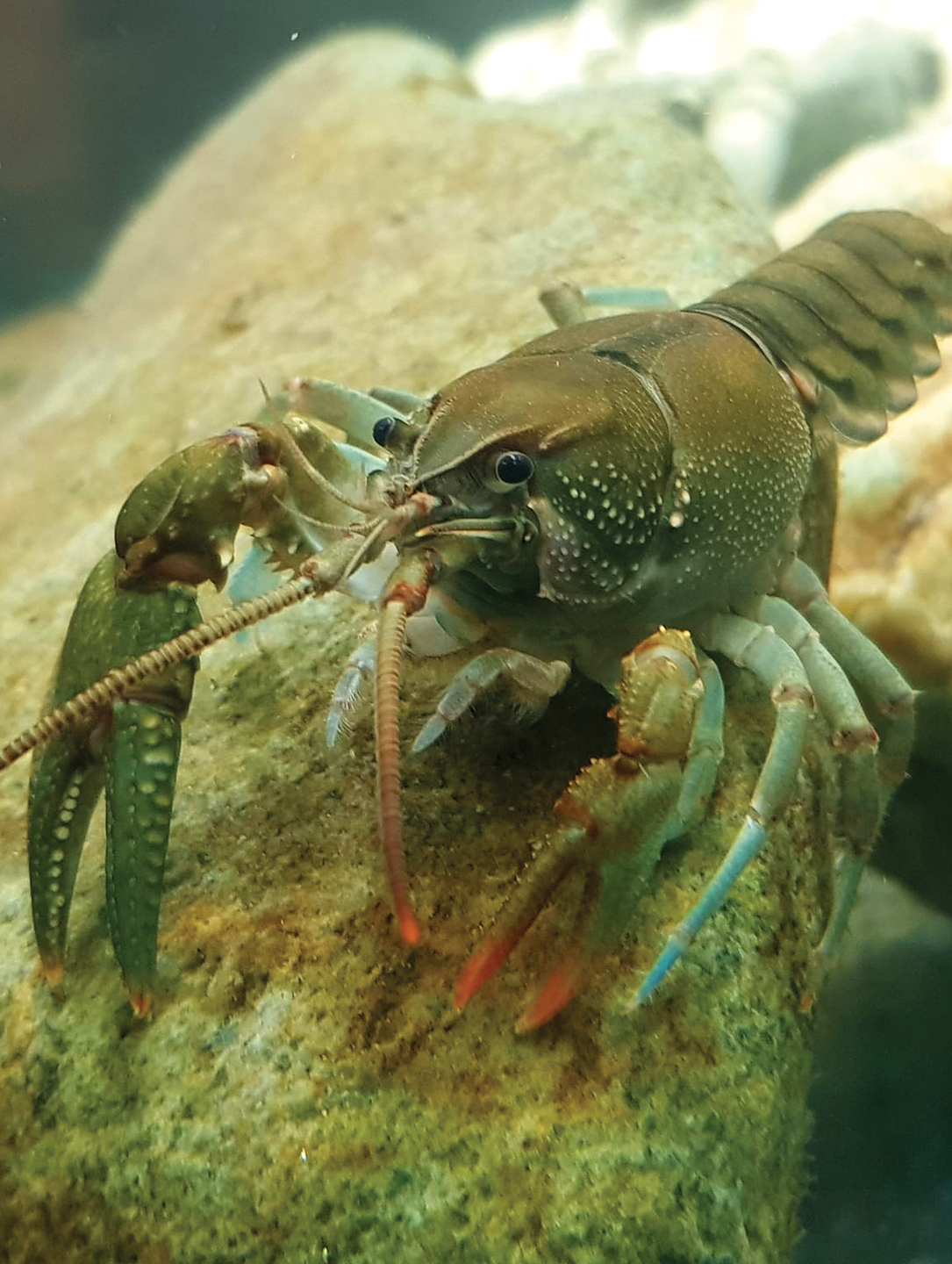
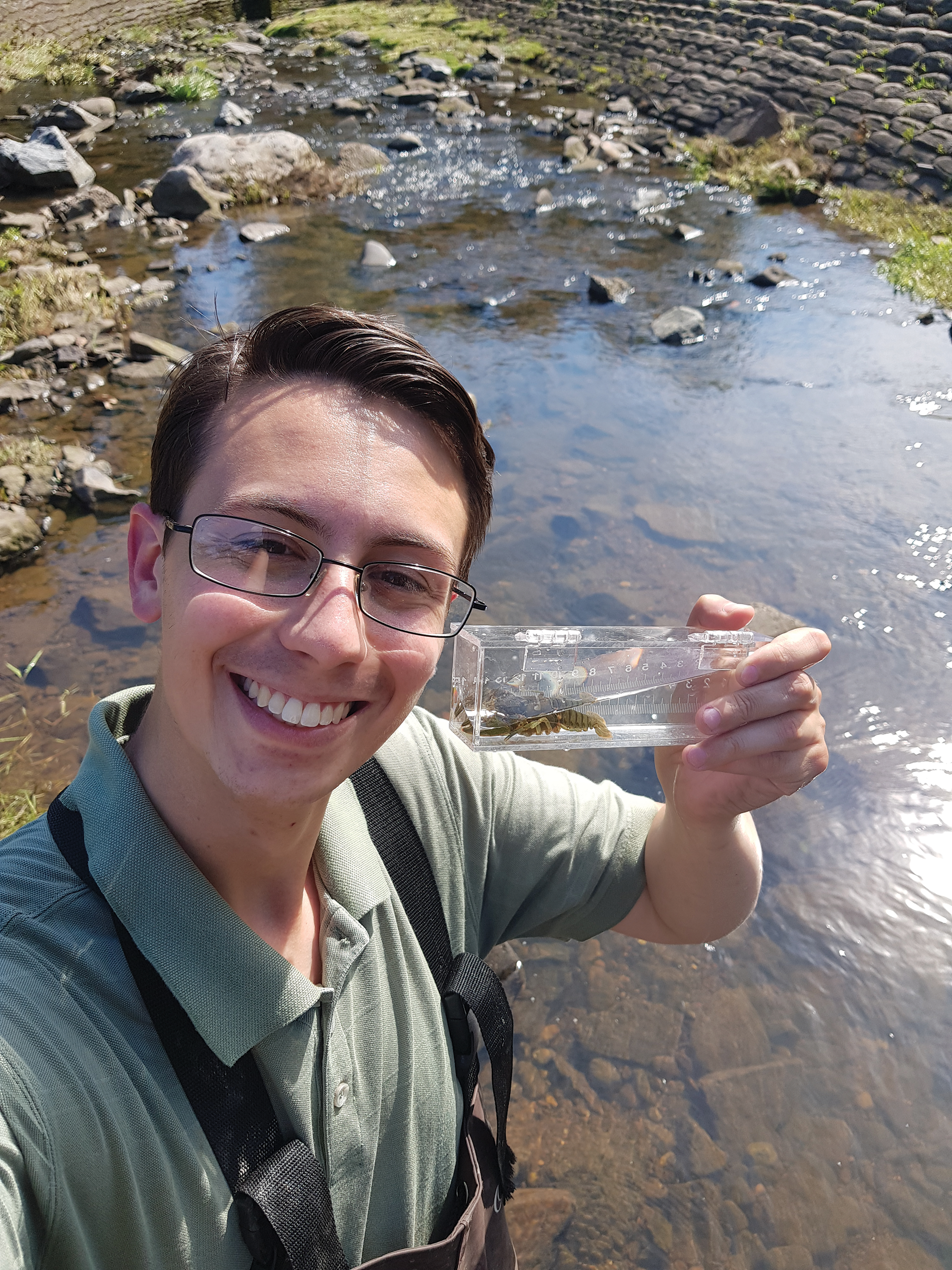
On an April morning, Nick Macelko was scouring the Assunpink Creek in Lawrence Township, New Jersey. It was a successful search. He found an acuminate crayfish (Cambarus acuminatus) on the creek bottom. “You can tell because he has that rostrum [part of the head that projects forward] that doesn’t have little spines on it. Cool.”
Biologists aren’t sure if the population in the Assunpink is a native species or invasive. Macelko is a project manager for the Pennsylvania Department of Transportation and also the treasurer for the Neshaminy Watershed Association. In his spare time, he surveys and documents crayfish species in Delaware River tributaries. He first found this population of acuminate crayfish in 2024 near the confluence of the Assunpink and the Delaware River in Trenton. Macelko’s enthusiasm and passion for the work are apparent. “I immediately knew what it was, and I was just super hyped,” he says.
The acuminate crayfish was first described in the late 1800s, but since then biologists have come to suspect that it is actually a species complex, or multiple species that are difficult to distinguish from one another.
Similar crayfish have been discovered across the river in Bucks County and in the Schuylkill River watershed. Macelko says recent genetic testing shows that the crayfish found in the Assunpink are a separate population.
“I immediately knew what it was, and I was just super hyped.”
— Nick Macelko, crayfish enthusiast
Investigation into the exact origin of this population continues, Macelko says. Since the acuminate complex has been documented in the Valley Forge area, the Assunpink population could simply represent an extension of the known range. But the crayfish are more numerous in Gold Run, a creek to the west of the Assunpink, than in either the Assunpink or Buck Creek, where they have also been found, indicating that the crustacean may have been introduced into Gold Run, from which it then moved into the other bodies of water. “We need to continue surveying, continuing to check out the other watersheds to see if it is present or not to determine if it is native or not native.”
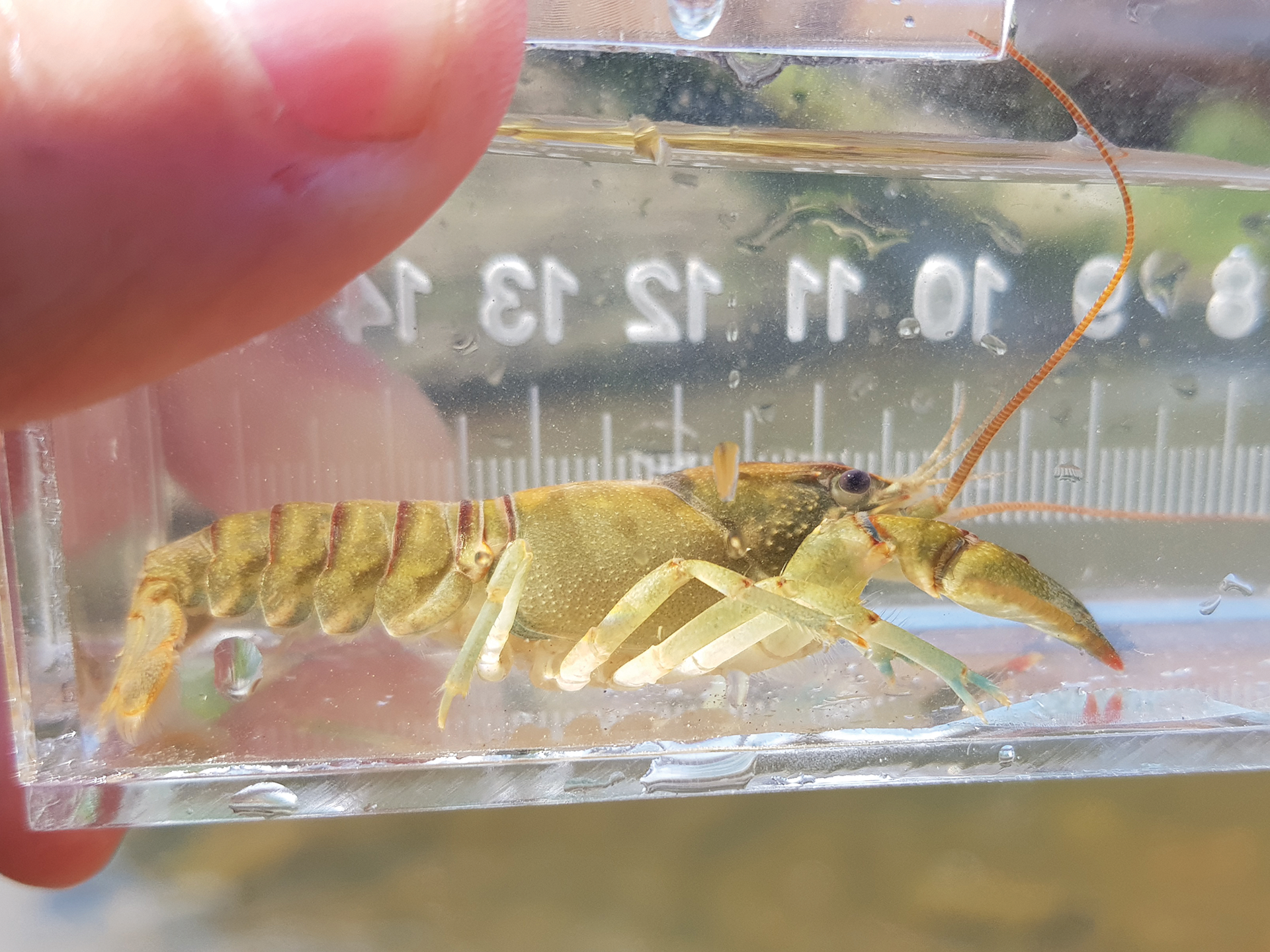
Macelko has found today’s crayfish in a stretch of the Assunpink eight miles upstream from where he found the first acuminate crayfish last year. “It’s possible that maybe this is established throughout the entire [Assunpink] watershed.”
There have been a number of efforts to improve water quality in the Assunpink Creek and other Delaware River tributaries. The acuminate crayfish is an indicator of good water quality, Macelko says, but the population is under threat from invasive species such as virile crayfish (Faxonius virilis). “That species … is larger than the acuminate crayfish. It is able to breed at a faster rate than the acuminate crayfish and is able to inhabit more areas in the stream.”
The use of road salt during winter months also creates problems. Macelko says that many waterways are slowly becoming more salty, which could have a negative impact on the crayfish and other aquatic species.