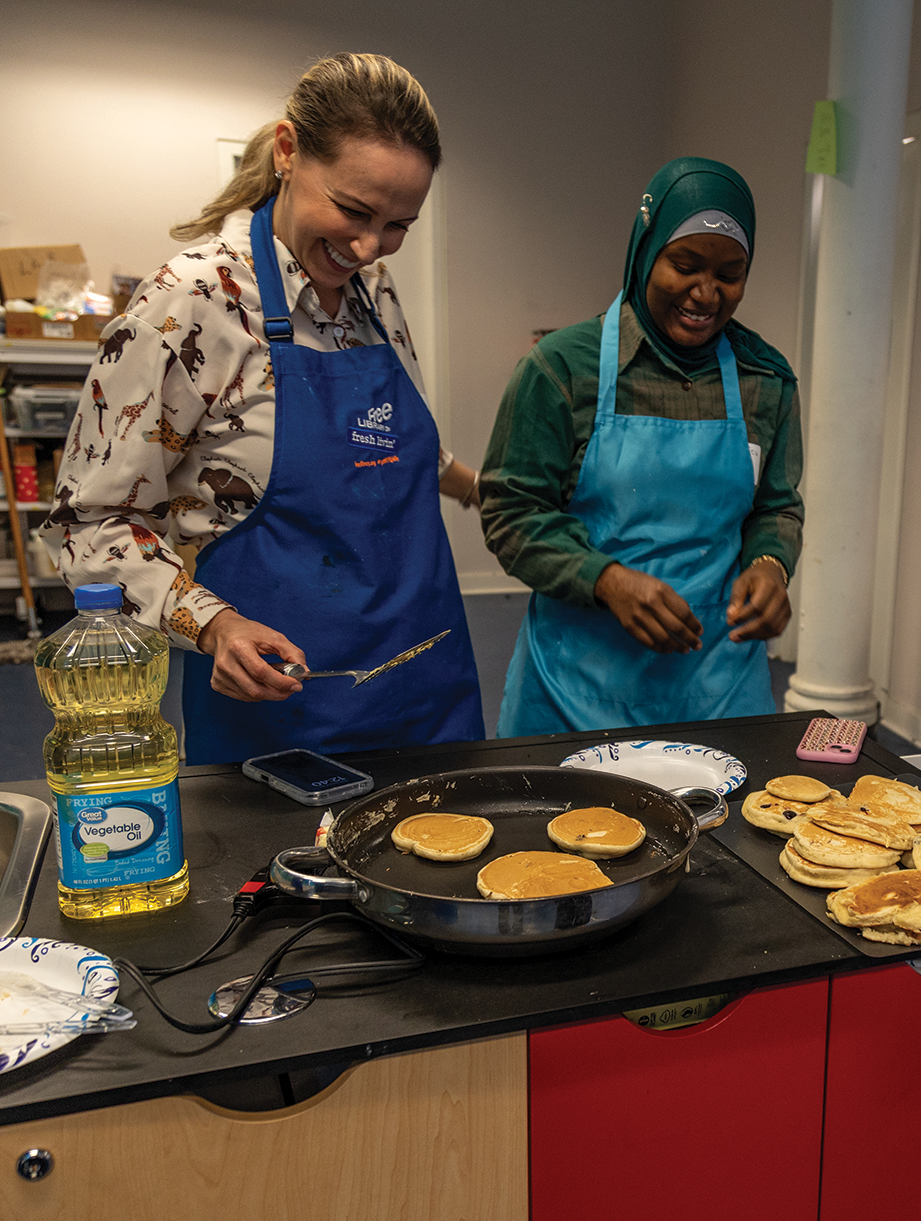
The name Edible Alphabet might conjure images of sugary breakfast cereal or playful pasta shapes. That’s not what has drawn more than 1,000 adult learners to this innovative series of free, fun English language classes at the Culinary Literacy Center in the Free Library of Philadelphia since 2016.
Lindsay Southworth, senior program manager, traces the origin of the program to an idea that the “magic in cooking together” would incentivize non-native English speakers to practice conversational skills. A well-designed curriculum keeps the focus on talking during the sessions, which involve team cooking followed by eating and discussing the delicious result. There are no tests and no deep dives into grammar, just lots of opportunities to learn new vocabulary, practice conversing and make both lunch and new friends.
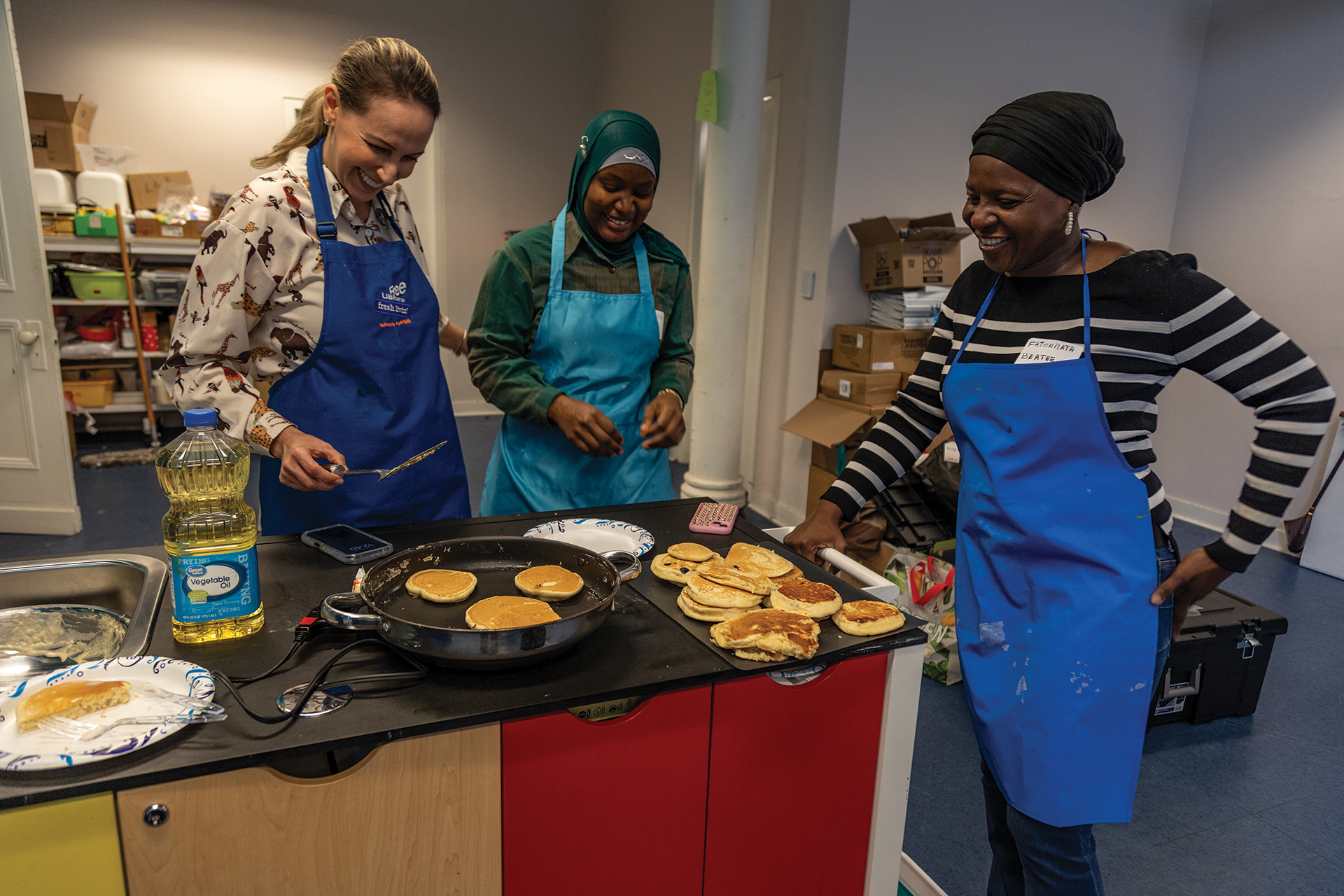
To get students talking, Southworth, assisted by chef instructor Shayla Felton-Dorsey, opens each session with a welcoming question such as, “Do you like spicy food?” Next, Southworth reads aloud key words in the recipe — “peel” or “seed” or “drain” — and Felton-Dorsey demonstrates their meaning. Students get into groups of three or four and, with help from Felton-Dorsey, start cooking. Once the dish is simmering or baking, they regroup to do a reading or a role-play or to engage in guided dialogue. Then it’s time for lunch, when students enjoy such made-it-themselves dishes as samosas, noodle salads or American favorites like pizza.
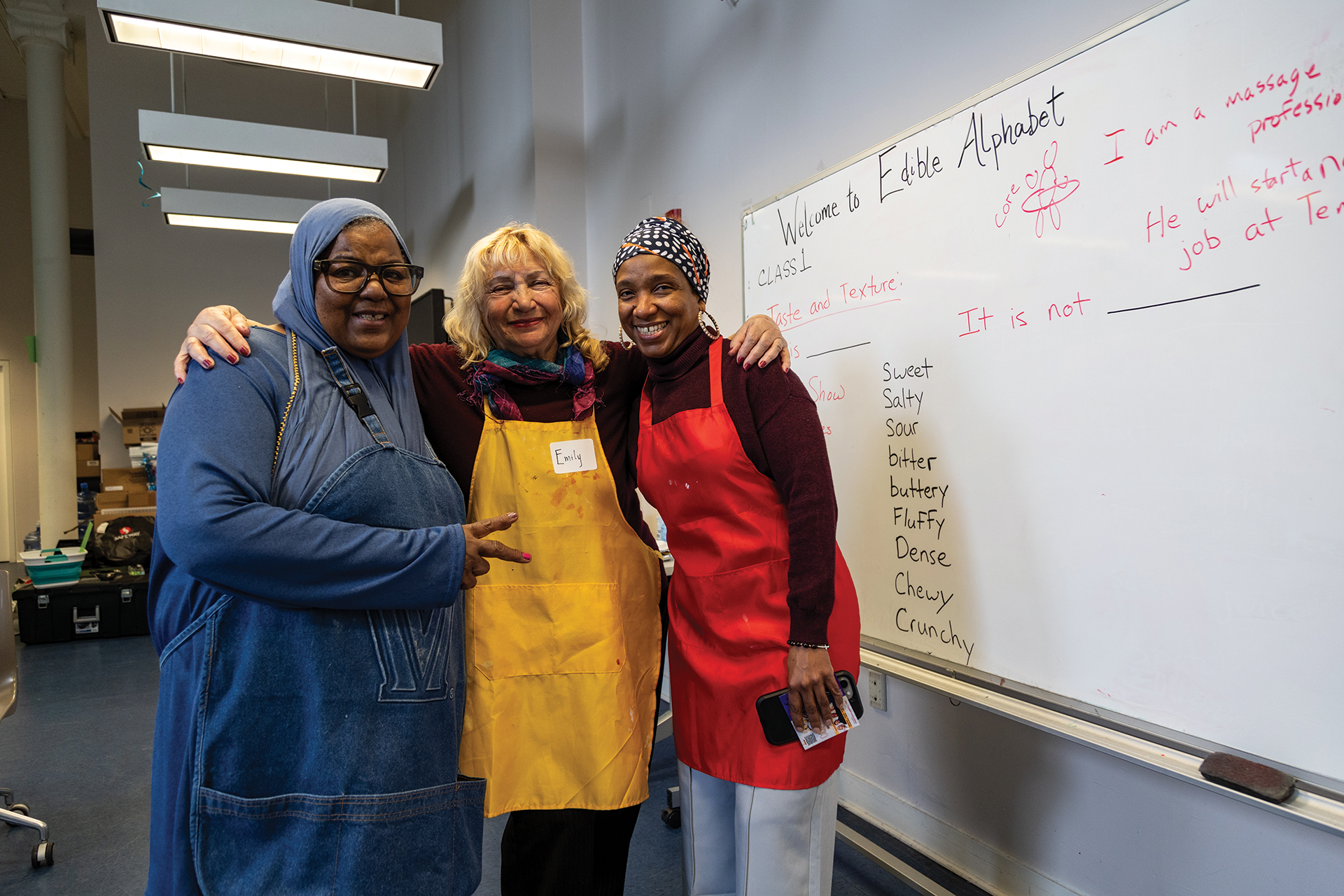
Southworth describes Edible Alphabet’s multiple goals. The first two are increasing conversational competence in English and introducing students to the many services the library system offers. She notes that some program participants have become library ambassadors and employees. Feedback from students attests to Edible Alphabet’s achievement of its third goal: building community. Students describe how the classes helped them feel less isolated and more connected to other new Americans and gave them increased confidence in their speaking skills. “I want to learn how to have a normal conversation, not just classroom English,” one Mandarin-speaking student says. “Cooking is a lifestyle activity, so it’s a good way to practice just talking.”
What we’re eating is less important than the conversations we’re having.”
— Lindsay Southworth, Free Library of Philadelphia
“What we’re eating is less important than the conversations we’re having,” Southworth says, but Edible Alphabet recipes do have to meet specific criteria. To respect religious and dietary concerns, dishes must be vegetarian. They have to be sufficiently difficult that it takes a team an hour or so to complete the recipe, and the ingredients must be affordable, both for students to make at home and for the library’s budget.
Funding for this free, open-enrollment program comes from the Free Library of Philadelphia Foundation, with additional funds from the City and corporate sponsors including Dietz & Watson and Comcast. Three-hour in-person classes — held variously at Parkway Central Library and the Northeast Regional and Lillian Marrero branches — run for six weeks at a time, while an online version of the program offers two-hour sessions for eight weeks.
Edible Alphabet students come from around the globe but often make the same observation. In their cultures, unlike in the United States, cooking and eating with family, friends and neighbors is common. Southworth says that Edible Alphabet offers a return to that cultural practice in which “there’s something so warming and nourishing about the collective effort of preparing and sharing food. The food tastes good because we cook it together.”
Japchae Noodle Salad
Serves 3
Japchae is a traditional celebratory dish in South Korea and is commonly served as a banchan (side dish), although it can also work as a main dish for a light lunch or dinner.
3.5 ounces Korean sweet potato glass noodles (dangmyeon)*
1 small carrot
1 small onion
2 scallions
4 mushrooms
1 cup spinach
2 tablespoons soy sauce
1 tablespoon sugar
1 tablespoon sesame oil
2 teaspoons sesame seeds
vegetable oil
salt
black pepper
* You can also substitute regular glass or cellophane noodles, vermicelli or angel-hair pasta.
- Boil a pot of water.
- Peel and cut the carrot into matchsticks.
- Thinly slice the onion. Cut the scallions into similar lengths.
- Slice the mushrooms.
- Blanch the spinach in boiling water for 15 to 30 seconds. Remove the spinach with a slotted spoon and shock it in cold water.
- Squeeze out excess water from the spinach, cut it into about 2-inch lengths and lightly season with salt and pepper.
- Measure and combine soy sauce, sugar, sesame oil and sesame seeds in a small bowl. Mix well until the sugar is dissolved.
- Bring the same pot of water to a boil again and cook the noodles for 6 to 7 minutes. Rinse in cold water and drain. Cut the noodles into 6- to 7-inch pieces.
- Mix the noodles with 1 tablespoon of the prepared sauce in a large bowl.
- Stir-fry the noodles over medium heat in a large skillet, stirring frequently, until translucent and a bit sticky (about 4 minutes). Transfer back to the bowl.
- Add 1½ teaspoon of oil to the pan and stir-fry the onion and mushrooms together over medium-high heat until the onions are translucent. Lightly season with salt and pepper. When the onion is almost done, stir in the scallion and cook briefly. Transfer to the bowl with the noodles.
- Stir-fry the carrot for 1 to 2 minutes until softened. (Do not overcook. The vegetables should be crisp.) Transfer to the bowl.
- Add the spinach and the remaining sauce to the bowl with all the other prepared ingredients.
- Toss well by hand. Adjust the seasoning to taste by adding a little more (start with ½ teaspoon) soy sauce and/or sugar as necessary.


Thanks for the recipe!! 😀
What an amazing program you are offering ! Food and conversation about food and eating together builds connection, confidence and community! Bravo & Buon apetito !